Friday, February 15, 2008

30th February by Chow Chee Yong


30th February
Photographic Exhibition:
19 February – 15 March 2008

Opening Reception/Book Launch:
Friday 29 February 2008, 7:30pm

Q&A session: 30th February 2008, 7:30pm


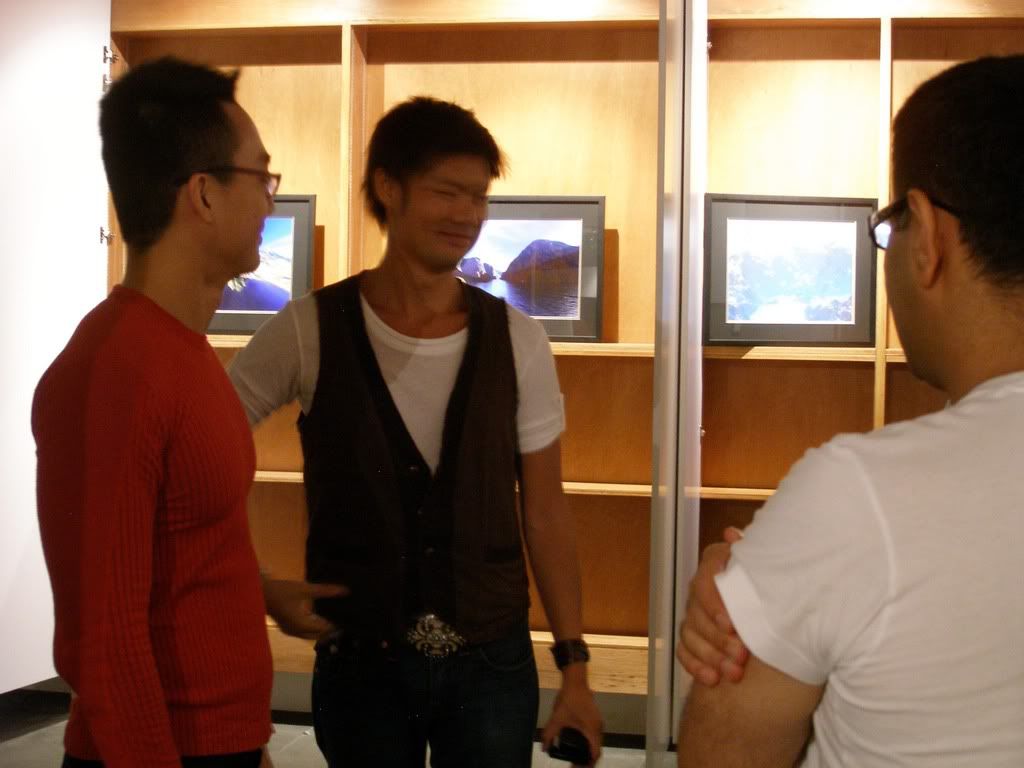
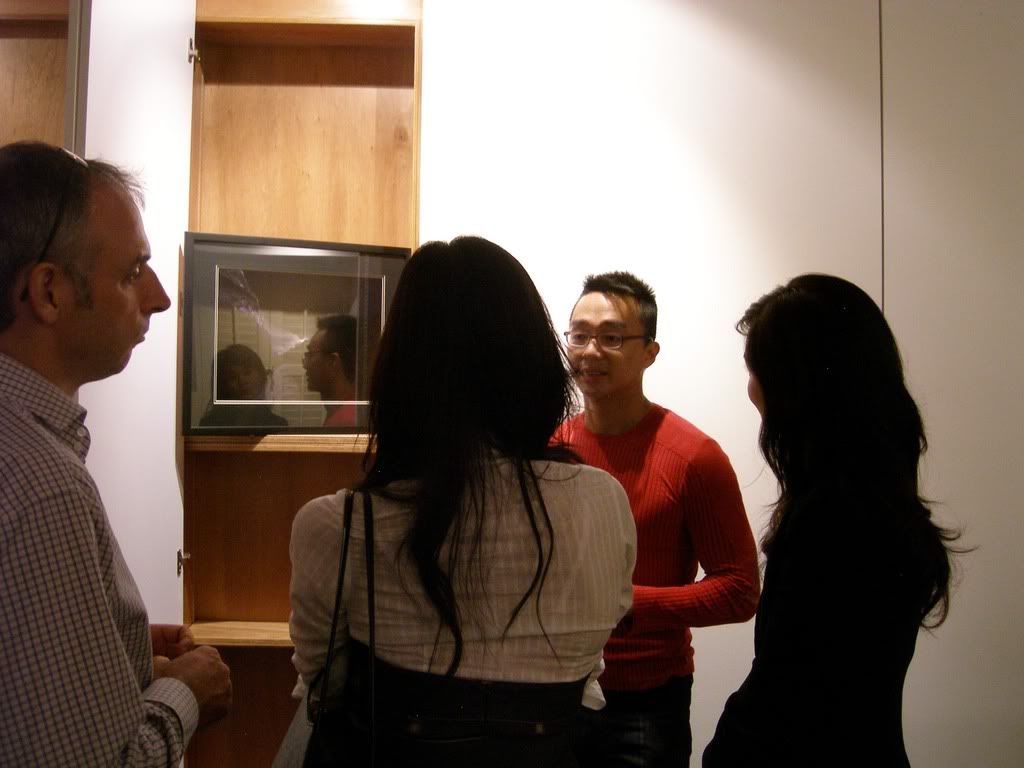
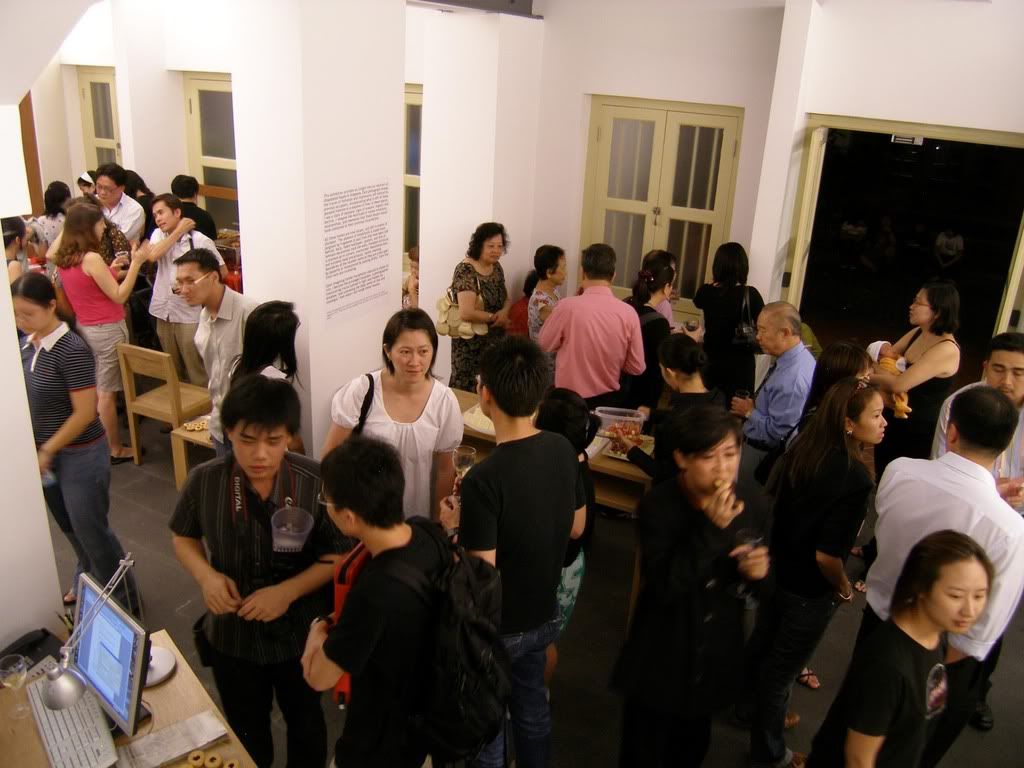
Kay Ngee Tan Architects Gallery is pleased to present 30th February- the sixth solo exhibition by fine art photographer, Chow Chee Yong.

30th February is the product of a four-year long awaited inauguration by Chow. He was known for being the first of only three Singaporeans whose prints were acquired by the Kiyosato Museum of Photographic Arts (KMOPA). Chow’s works were further showcased by KMOPA alongside Nobuyashi Araki, Ansel Adams and Helmut Newton in his most recent group exhibition.

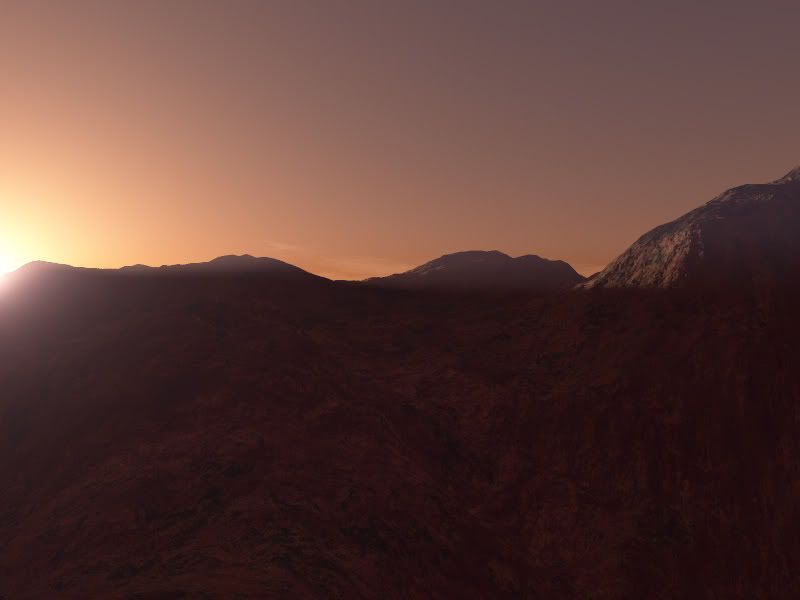
Drawing influences from the surrealists, most notably Salvador Dali, Rene Magritte and Op Artist MC Escher, Chow questions possibilities of subverting expectations of the experiences. These processes of questioning reality forms the catalyst of visual ideas that propels Chow to sketch, and thus beginning the recording and compilation of these photographic images necessary to make the non-existential alive. The collective of images were finally juxtaposed and fixed onto the final photographic print in the darkroom.

In Chow’s work, we experience surrealistic images that defy our notions of conventional perceptions. A swimmer freestyles through a ripped fence, another swimmer surfaces to inhale air in a strip of water in a building corridor; windows emerge in the midst of field; building columns taper off into buttress roots. These juxtaposed images fragmented of time and spaces, retain truly absolute to the artist’s imagination. Chow will be launching his first publication, titled 30th February alongside the exhibition opening reception. It showcases development in his art practice, images not publicly shown, and illustrations of the process to realizing his “personal belief that one’s imagination and the very private world of dreams must form the start of any creative work”, as quoted from the artist.

Chow graduated with a BFA (Hons) degree in Photography in 1994 from Western Michigan University, USA. The JCCI Art Scholar received his MA (Distinction) degree in Photography in 2001 from the Musashino Art University. He has held a number of solo and group exhibitions internationally in Hong Kong, Japan, Singapore and the United States. Chow’s works have also been featured in numerous publications such as the Passages North (USA), OP Editions (Hong Kong), particularly the Nippon Camera and Asahi Camera in Japan. His works have also been compiled in two series under the titles of Light Trails and Things unseen, Places not been. Chow’s original prints can be found in various corporate, private and museum collections in Hong Kong, Japan, Malaysia, Singapore and the United States. He is currently a photography lecturer in the Department of Visual Communication at The Temasek Design School, Temasek Polytechnic.

For further information, please contact Ee Peng or Tricia at gallery@kayngeetanarchitects.com or (65)64230198.

Friday, January 18, 2008

Thursday, December 27, 2007

Joo Hong's Inks


Joo Hong's Inks

Opening reception: Wed 16th January, 7:00pm Gallery Hours:
Tuesdays to Fridays 11am-7pm,
Saturday 11am-6pm and by appointment
Lim Joo Hong: 1954-2005

Late artist Lim Joo Hong - who is known for the art working style of combining brush strokes and spatter marks on the computer - had artistic interests that originated in charcoal, watercolors, and Chinese ink painting.

On 16th Jan, to commemorate his life and his work, his daughter Tricia and wife Jessie will be organizing an exhibition, Joo Hong’s Inks, to showcase 24 of his early ink paintings.

Lim, who died at the age of 51, had a short and distinctive career as an artist after stepping down as the CEO of Singapore Computer Systems (SCS) in 2003. In his 20-year-long career in the information technology industry, he was a systems engineer and program manager with the Ministry of Defense before moving to the then National Computer Board. In the late 1990s, he helmed an Internet start-up company called Tricast. In 2003, he resigned after seven months as SCS' CEO, citing ill health stemming from hypertension and high cholesterol levels as the reason.

The father of three, who studied Chinese painting under cultural medallion winner Chua Ek Kay, was just beginning to attract critical and public interest as an artist when he collapsed at home after jogging on the night of Dec 28 last year.
His earlier work gives a modern spin on traditional Chinese brushwork and pushes the boundaries of the use of Chinese ink on rice paper. Through his art, Lim invites us to imagine forms within his brushwork - a rainfall, a palace, a swinging chandelier and interlocking leaves. In turn, he reveals to the audience his fascination with China (after living there from 1995 to 1998) and the rich western influences he was exposed to throughout his life.

The Singapore Art Museum had acquired two of his prints, Inside the Crystal Labyrinth and May, in 2003. He had also completed a commission of some 150 artworks for a new Four Seasons hotel in the Maldives.

Lim’s earlier exhibitions include Promise and Shared Passions (a two person show held with ceramist and wife, Jessie Lim) and Promise II, held posthumously in Singapore, Langkawi and Kular Lumpur. In 2006, Lim’s prints was featured in Hyper Design, the 6th Shanghai Biennale.

Lim has left behind dozens of works he tirelessly created throughout his life. These works are managed by his family, and can be found on http://www.limjoohong.com.

This exhibition will be opened by Mr. Kwok Kian Chow, Director of Singapore Art Museum, and ends on Tuesday, 12th February.

----------------------------------------------------------------------------------

陈家毅

我认识的林裕丰,中学时代开始就爱涂涂画画;当时学校有一份文艺刊物,还有一份年尾才派送,万生期待的校刊。 林裕丰的绘画与设计,往往就成了它令人眼前一亮的封面,总结了一整个年头,强而有力全校师生对外的呈辞。

校内的人也不觉得不寻常——这位相貌和蔼一点并不炫耀的理科生,艺术天份竟然如此不同凡响;或许科学家、物理学家,与艺术家对事物的好奇心与态度毕竟是一样的 : 默默耕耘在练习簿上的涂描,开拓结果的是一个令人意想不到崭新的境界。

许多年之后,经过牛津,住过北京;当过总裁,成家立业之后,半百之年的裕丰毅然放下世俗的繁华富贵,每天每天专注用神在宣纸上沾染水墨画彩,旁人恐怕不会明白,其实他正在点滴延续寻返青少年涂涂画画那段净真纯美的日子。

怀着科学家爱探索的精神他看到了数码打印可以跨越艺术的无穷潜质。 两年前展出的版画作品,是一次破天荒的尝试。 可惜真祗是那么的一次。 天嫉英才无奈又无情,让我们扼腕叹息。

在他版画创作的过程间我探望了他好几次,惊讶地发现鬼斧神功科学数码影相的背后竟另藏了一叠日夜辛勤的水墨真迹;那些浓稀液体滴染开来的形相,既属於传统中国画也属於西方抽象派的艺术。看似简单无奇的变形虫,目睹之后在我们的脑里逐渐发酵,化成医室里透明胶质检验盘上淌留的血迹,天空乍然散开笑脸式的烟花,那么含蓄温文尔雅,那么从容充裕丰姿,正正如其人。

------------------------------------------------------
“裕丰遗墨”展

展期 : 2008年1月16日 至2月12 日
时间 : 星期二至五 – 11:00 至 19:00
星期六 – 11:00 至 18:00
地址 : 陈家毅艺术空间
16-17 Duxton Hill Singapore 089600
Tel – 6423 0198 Fax – 6423 0197

Thursday, December 13, 2007

MAGNUM MAGNUM IS FINALLY HERE!


Published in 7 languages throughout the globe, Magnum Magnum brings together the best work from acknowledged masters —among them Henri Cartier-Bresson, Robert Capa, Eve Arnold, Marc Riboud, Werner Bischof and the rising stars of our time; Martin Parr, Susan Meiselas, Alec Soth, Donovan Wylie and Chien-Chi Chang. This hardcover book edited by Brigitte Lardinois, comes in a breathtaking scale, giving the photos an impact never seen before in book form. It celebrates the vision, imagination and brilliance of Magnum photographers, marking the 60th birthday of the Magnum Group.

More information on this awesome book, and a great introduction by Martin Parr is featured on http://blog.magnumphotos.com/.

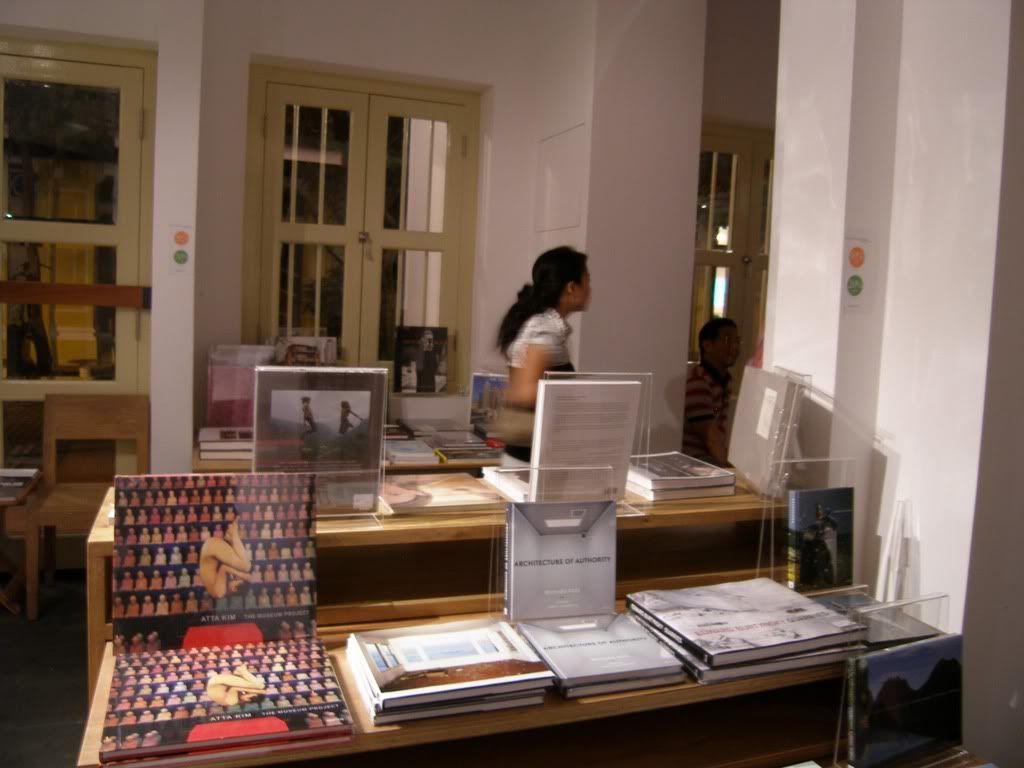
PS: Temporarily out of stock on Amazon, support the local art scene and grab you're copy at our gallery bookshop! Psst! Our 10% discount on all books is still on! Besides, think of how much you're saving on shipment! Whao.

Saturday, December 08, 2007

Forum #4 - Identity: Women in Photography

(The much-awaited transcript)

Meridel Rubenstein:

Maybe we should introduce you, or perhaps you can introduce yourself.Thank you for coming, men, this is great.

I decided to do something a whole lot personal, not because it is more personal to be a woman, but I figured that there will be a lot of young women here and I notice that in Singapore people don’t tell their ages? But I will be in 59 in March. So if anyone wants to help me in this per say, you could say that you’re Chinese and you’re 16 right?

So I’ve become a photographer working for over 30 years, during a time when women did not have a voice, and women now have a voice.

So I think it would be interesting for you to see some of the things that I had to grabble with.

In 2001, I was offered a chance to make a book, a monogram of 20 yrs of work. This is my first book, the copies never arrived, and there is one in a bookstore somewhere. And I’m putting it here not to brag, but to say that it was a landmark for me and it is actually why I am in Singapore. Because imagine working for so long and then being able to put your work together and stand back to take a look at it. You know, in a new face of gathering again. This is like a huge breath even though it is work from different projects.

It is related to 911, because of the issues we humans save in the role. All over the world, people became really concerned with up-rootedness and people’s loss of the sense of belonging. So that was a real focus in my work. So what you’re seeing here is somewhat a 3-dimensional piece, about that size actually, a little bigger than that actually. But it is the transparency between glass, sand-blasted on the outside in a 19 century wood go go. And what you’re seeing is called volunteer, it is referring to transit in safely called ‘trees volunteer they just grow on their own’ as oppose to landing somewhere else. We call these self-grow, self-rooting trees volunteer. These are people that have come and gone from Vietnam as a result of the war, and I’m going to talk about the later image of sandblast image of more dug out, trees falling into water and stray people to and from, in times of war. Just to mention, this isn’t just the last few years even though the book came out in 2004, 2005 the night of a couple years of retrospective shows, so I’m just giving you a sense of something, but also a way for me to begin talking. So this is a piece from 1990, I work with a lot of materials, and materials are everything to me. It’s a little different in Singapore, because materials have a hard time here. Buying materials is hard here, with all the different languages.

These are all, whenever you see a brown and white print, it is made with a 19th century platinum plated process, where I take my negative and enlarge them add cold water color paper and you can use the sun for a UV light source. So when you see something like this, that is bigger than this, each print is about 20 x 24 inches, so you add it up, and it is about 7 feet tall. This is called Three Missiles, and it is about ( I have to tell you that I know what it is about after I do it) science and religion, religion made out of science, and how science is made out of religion. It is a feminist piece because; well I’m re-contextualizing my work for you today, because I want to talk about women. A man could have made this piece, but I as a young woman looking, I come from two parts of the US, and what I’m really gonna talk to you about is the emicicle. Because its was the home where I spent 30 years, and the home of the first people, the indigenous people, there are 70 indigenous tribes, over 70 in the US and probably over 15 of them are in the amicicle. So we have a sense of preservation culture, and then we have the… which is the home of the first atomic bomb was designed to be built. So as young woman, thinking about all those things, I thus conditioned myself, 20 years ago, I shall save you the details.

I want to read something, but just going back, I want to say that the prints are on watercolor paper, but then they are set in steel mount. They are hollowed out, so they are like giant pieces of net-board. And there’s text standing in the field, so there is black and white font, the left says white force, the middle says for element, and the right says physic space. Right up on the top. But steel and platinum together are two different kinds of metal; hard and soft, warm and cold (you see the detail now in some of the images). With this image I want to reconnect, our talk about women. I think it is very important to honor our elders, as women. Because I’m a father-identified girl, I am much more identified with my father than from my mother. But I know from this identification process that I’ve had, how important it is to collect women mentors, and honor them. I was named after a great writer, whom my parents didn’t know anything about; they just liked the way her named sounded, they thought she was dead, and I had the chance to meet her in amicicle, she came from Minnesota. Her name was Meridel the third and she lived to be (oh this is so wonderful); she lived to write until she was 89. This is something she wrote. She wrote about (so imagine an older women writing this, she wrote this when she was 70).

‘The body repeats the landscape; they’re the source of each other. We are marked by the seasonal body of earth, by the terrible migrations of people, by the swift turn of the century, virgin unchanged, never before experience on this rainy earth.’

Did I read too quickly? Is it ok? It is a beautiful poem, such a sense of time and place. And looking for her in the 20th century, she was someone who would watch the storms on television, and say ‘the earth wouldn’t stand for this any longer’. She has this sense of earth and body, the women’s body, earth and the relationships between them. Moving on, I’m honoring (to my friends that just came in), the matriarch in my life. On your right is an image I made called matriarch. A photo of an egg in the photo and one of Meridel the third, great grandmother. That was an early piece, I was just your age. This one on your left is a very important picture for me, it is of my mother-in-law, but she’s come to stand for, she was 92 in that picture. Here is how I used her, as the woman in the middle; I used her over and over as the ‘woman in the middle’. I’m going to talk about being the women in the middle. Here she is part of a piece about the world of a Native American and a nuclear scientist being woven together. And I’ll show you a bigger project on that.

Here in the matriarch on your left, with my mother on the left and my grandmother who came from Russia, she was an immigrant, and they came to Detroit, and I’ll tell you how Detroit was, what a sleepy town, a car city, where all the American cars was and factories, big factories, its like Singapore, an industrialized city. I was brought up in the farm on your right. Sorry I don’t have a great photograph, it was a beautiful farm with hundred of acres with cows and animals (Just so you know). In the funny hippie picture over there, which is a funny picture of the family I married into in New Mexico. And they don’t really look like that, but we were out on an outing, this is just a student picture many years ago, but this is showing you the landscape that I went from. I went from Detroit, to Singapore, to Vermont, going to New Mexico. Then my husband came with my high school daughters. That was that white sand where the first Atomic bomb was detonated. So that gives you a sense of the space, of the web southwest of the US, a very dramatic space for us, with all sorts of contradictions.

I was very lucky to have had a woman mentor, when I was only 15 in summer camp. A very great photographer called Wendy McNeil. She was very interested in resentlessness, so she liked to put pictures together. This time, with this man on your left, with his great-grandmother to see how faces are mapped. Right away, through Wendy and myself, I became quite interested in portraits. And I just want to mention another teacher I had, which was Minor White. I don’t have any good reproductions, but he was one of the great metaphoric using landscapes and abstractions from rocks, stones water. Just imagine a crystal of ice, and doing a close-up on that. This might be that, a close-up on a pattern on a rock. Very dramatic and very powerful photographer to study with.
This is me also being a student.

You have to imagine now, that I started photography as a student, and Wendy’s taken my work to Minor which happens to be at a place called MIT, very technological, and this is where they teach engineers how to be creative. With older men only, and all the men was photographing rocks and trees, so when I had a chance to take photographs, I went right away to where I thought there were rocks and trees, a place that was as far east as you can get in Newthanland. And I photographed rocks and trees, but I was able to find one woman subject, a girl in an abandoned house, a girl’s room. So I did my first year in photography as the only girl with a master in photography, amongst a group of men who wanted to be just like him. It was a very dynamic situation as I was the only girl, and who did portraits, so basically, they would just ignore me. I did try to make photographs of landscape, but really, I was interested in people. This was 1972, and I understood that I needed to support myself, as during this time, there weren’t galleries, and this obviously was not a commercial attempt, so I wasn’t going to be a commercial photographer. There wasn’t any example of women as studio photographers anyways, except for Diane Arbus.

So anyways, going to New Mexico and studying to learn to teach. So he sends me to New Mexico, and I take these romantic pictures. You must know that New Mexico is closer to California, so romantic pictures are not going to fly there at all.

But in any case, I went to study with this man and a few other men, but I happen to have a photograph of him. So for you who are interested in photography, this is Beaumont Newhall. Lot of time, his name gets loved because he’s old, he’s passed on, and he was the first person to write about the history of photography. He wrote the first book he did the first research by going to flea markets in Europe finding new photographs and piecing it all together and writing it down. This is one of his photographs. But as a young female student, what I did know was that there were only 11 women in this book of hundreds and hundreds of photographers. And when I said something, it was just a normal responses as the only women with this book, the rest were men who had wives making lunches for them, as the only girl you want to know where the other women went. So I went to the library to do research, at the Smithsonian restriction, telling them I’m covering 19th century photography, I was trying to find some sources.

I’m going to bring this up for everybody who are students, because as I was talking in my photo club, these are issues on woman who came up before other issues about your otherness, you’re differences in terms of ethnicity, religion, your gender preference or whatever.

To be Continued…

Tuesday, November 27, 2007

Wednesday, November 14, 2007

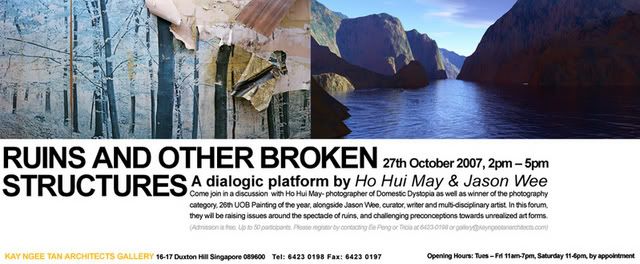
Discussion forum #6: Ruins and Other Broken Structures

Hi All, the long awaited update of the forum discussion by Ho Hui May & Jason Wee is finally up! Still in the process of compiling notes for the forum, so please bear with the fragments yet to be completed.

Hui May:
Hi all, I’m Hui May, I’ll be showing a few images and discussing works from a few photographers today, the first photographer I’ll be speaking about will be Edward Burtynsky, a Canadian photographer.

On Edward Burtynsky:


Images with courtesy from http://www.edwardburtynsky.com

This is a series of works titled Shipbreaking by Edward Burtynsky, who has traveled from Canada to points in the U.S., Europe, India, Bangladesh and China to document shipbreaking, a process of dismantling decommissioned vessels to salvage materials for reuse and recycling. He artfully documents the entire working process, starting from the arrival of the ships till the physical breaking down of the ship’s structure, which were conducted on the beaches of Bangladesh.

During the monthly high tide, the ships are taken 50 kilometers (31 miles) offshore where they are driven directly towards land at full speed. After the ships are lodged on the effluvial flats of the Ganges River, the receding tides give the workers ready access to them. These images are all taken with large format cameras.

I’m interested in how photographers go about doing their projects. Burtynsky carried out extensive research to approaching his subjects, trying to find a time of year when the atmospherics would be good for the shoot.... He even asked a guide to make him a map and draw a line where the sun comes up and goes down, so that he would know where the ships were and how the sun was going to play on the lights and shadows.

On Robert Polidori:
The next photographer I’m going to show is Robert Polidori from the book titled “After The Flood”, taken during four extended visits after Hurricane Katrina between September 2005 and April 2006 in New Orleans. These photographs show widespread destruction resulting from significant event in global warming as well as systematic failure in government response. So I’m going to show quite a few images, which I think are very powerful.


In an interview, Robert Polidori said that he was interested in portraying psychology loss and fatal, so we can ask ourselves what do we feel when we encounter images like this.

The interiors of the house are how individuals externalize their internal values. Just like what we hang on our walls, what kind of furniture we have, reveals what kind of person we are. They are a materialization of interior lives.

On Sophie Ristelhueber:
Next photographer I’m showing is Sophie Ristelheuber, one of my favorite photographers. She photographs what she calls, the details of the world. They are the details of conflicts, details of traces of history. Details of the world are like dust on the body, wounds that are not healed. She has photographed war-torn places such as Iraq, Kuwait and Bosnia.

These are from an exhibition I saw of hers, I think it was held 2002 at the Museum of Fine arts in Boston. La Campagne (1997). The title translated as both countryside and military campaign, the images, seemingly picturesque countryside landscapes, reveals disquieting evidences of conflict upon closer inspection. These images are mounted on aluminum sheets without frames and some of them were just stacked up against the wall like that, she gave very little contextualizing information, everything is fragmented which leaves possibilities of multiple readings and open-ended. She also had some pictures that were free standing which she did not hang, they were just standing upright.

I am going to show some images of my past works.
This is a series I did in Boston. They are taken during my 1st year in Boston, after 911. Like most people who don’t live in New York, we experience the events through television and images, images that are mulitated. I found a site in Chinatown in Boston, which I went back repeatedly to photograph, through the course of 3 months. I was interested in traces of history and the people left behind the kind of garbage that was thrown. I was also playing with light, colours, shapes and lines.

When I was shooting this, uh… alright, this is a personal story: my mum had a stroke when I was 20, she was in a coma when she was in the IDU. I think she was really very bad at the time and the doctor told us: “Your mum’s body is like a broken pipe”, it can never be mended. Haha… as you know doctors should all have training in how to relate to patients in a more sensitive manner. He made me look at how objects can be symbols or metaphors for the human body.

I printed the images in 2 pieces. Don’t really know why, they reference my feelings about 911, a particular plight in Boston, and they reference my mum’s death, but they are also just images. I think by having a slit in the middle brings the viewer back into the materiality of the photographs. So it starts to encompass all these different histories and different time. Till today, I’m not sure if they’re successful, it was just something that I needed to do at a particular time. I also have a very strong interest in painting, like the abstract painting as you can see some of my photographs, are referenced from painters and gestures of painting. They were shot in a space of about 6 days.

On Michael Light:

The last photographer that I’m showing will be Michael Light, a San Francisco based photographer. This image is from his show called “A Hundred Suns”. They are images of nuclear testing, by scientists. The images are from the archives in Los Alamos National Laboratory and the US National Archives in Maryland. Between 1945 and 1992, the United States detonated 1149 nuclear test explosions, an astonishing number. Until 1962, the tests were conducted in the atmosphere and in oceans. 216 nuclear tests were exploded 63 miles from Las Vegas, in the desert areas. The remaining tests were detonated in the Pacific Ocean. Till today, the immediate and lasting consequences of the nuclear tests are still unknown.

Michael Light is a photographer whose works draws a lot on the politics of environment and American cultural and social relationship with the environment. So he got access to these photos through the archive in which he either scanned or rephotographed them. The colours that we see are its original colours.

These are images about power and violence, questioning how we deal with beauty in the face of horror.
(For further readings, pls go to http://www.michaellight.net/100suns)


Jason Wee:
Hi all, I’m Jason. Uh, I didn’t bring many of my past works along, so probably I’ll just show you a few of it. As you can see here, I shot in both colour and b/w which are two different sets, looking at the same theme of lost spaces. The b/w images seen here were shot with medium format, traditional b/w. These anonymous spaces are real spaces, but you are just unable to tell where they are. The colour ones are images I’ve taken of places that don’t exist. I’m going to read you some thoughts I have about developing this work, referencing from an Encyclopedia in New York...

(as the texts were too long, we are unable to post it. Do request a copy of Jason's notes through email at gallery@kayngeetanarchitects.com)

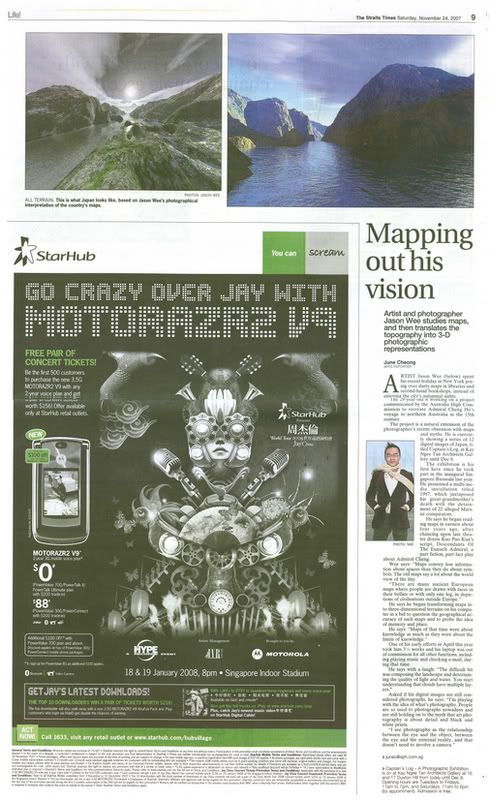
What I did was I took 15th and 16th century maps, which started with maps from Southeast Asia. The explorers who constructed the 15th and 16th century maps had little but incomplete idea of how Asia look, like knowing that China has coastline, but has no knowledge of how long or wide the arc is. They knew that some islands exist after China, so they just drew islands randomly in the straits map. After a while, they thought Indonesia was a bunch of islands, so in the more updated map, south of China there were just clutters of dots, but these conclusions were all flawed. I was thinking why the explorers thought this was an accurate map of Asia, this is the most cutting edge document of our time that could get to this day. I was thinking what if he had a camera, what did he think he would see looking at the map if the map was accurate?
So what I did was I took these coastlines I want to call them fake but it’s not fake, they’re real but not real, they can represent Japan for example. But it’s not accurate as all the borders are lost, in the map Japan connects up to Russia. they have no idea how far the island goes.

The Chinese maps are funnier, funny is that the conventions are written more similar to us. They just draw a dotted line and indicate the distance and state the inlets to watch out for on coasts. They don’t draw us accurate of what we thought is accurate.

I rendered the map of Japan through four different seasons. I rendered it on computer and using a virtual camera I took a picture of it.
So recently I was framing the finished images for the show, the framer kept asking, “Wah. You take one uh? Where you go uh? All four different seasons uh?”

As these maps don’t provide alleviation so I have to come up with my own. And then, I figured that for Japan was not fixed. *laughs Yup… so it’s not accurate anyway.
So I was using a gaming software, incidentally a guy uses it whose book is published by Aperture. But the technology is behind, with some limitations. For video games, you can design a local landscape but meaning you can still render a country but cannot render a map, now that with better technology you can render a landscape with the entire plan. Still, the engine was re-serviced where it was actually used in the Jessica Biel movie called “Stealth” about the fighter airplane. They used it in the scene where they send something to Mars, they used it to render Mars, to give the idea of what Mars looks like.

For my case, I was trying to base on referring to something real but not quite. On the day of the show, I’ll bring a copy of the map over. The first step I did was based on three different maps, the one for this shot is just taken on one. Well, the first three I thought like I didn’t explore the richness of these maps enough. So I thought of trying out a different map. I wanted to take on Asia, so I went all the way north and sort of downwards. So I thought I’ll just work on the whole set on Japan.

Currently doing a series on Australia, as I just worked before on Cheng Ho. Got inspired by this playwright, Guo1 Bao3 Kun1 who wrote Descendents of the Eunuch Admiral which had this really wonderful scene in it, in this Bao3 Fang2 (Treasure Room). This treasure room is really strange where the castrated bits of the eunuchs were kept, most talked about but no one has ever seen it. The record number of eunuchs was more than five thousand, so imagine the number of bits that’ll be in that room. These have to be returned to the owner when they died, as Chinese has the belief in buried whole. But no one has ever seen them, no right? So can you imagining how frustrated you’ll be if you’re eunuch? You don’t have any idea if your bit is still there, you don’t feel whole, and you’re held like someone’s controlling you. Because Bao Kun is so interested in hierarchy and genders, so he created a scenario where it’s like a huge archive, the eunuchs’ bits go up when they’re promoted and when they’re demoted the bits go down. So during promotion day, you see the bits going up and down.

(to be continued)

Saturday, November 10, 2007

Wednesday, November 07, 2007

Thursday, October 18, 2007

Thursday, September 27, 2007

Photo Sharing and Video Hosting at Photobucket


Wednesday, September 19, 2007

Tuesday, September 11, 2007

Photo Sharing and Video Hosting at Photobucket


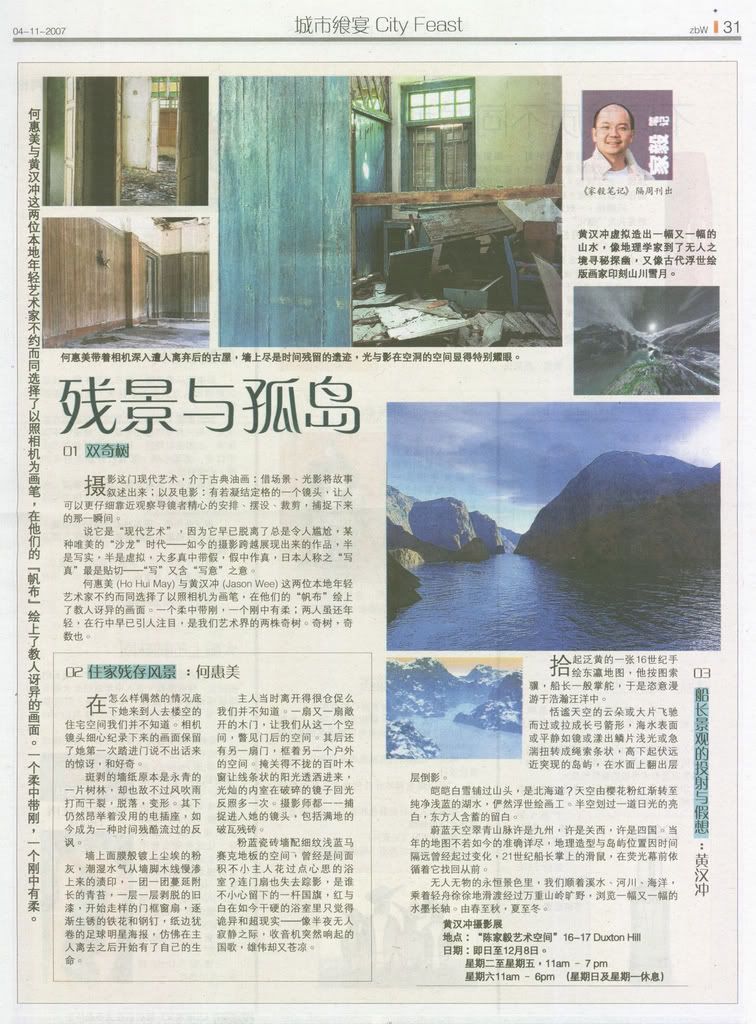
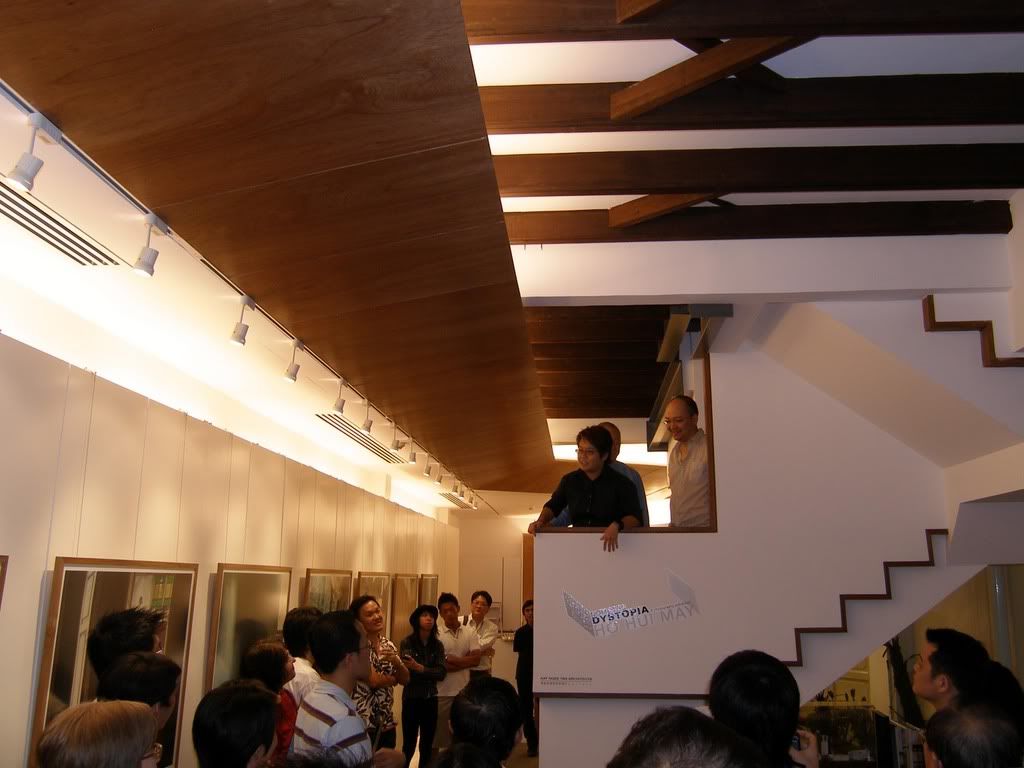
Kay Ngee Tan Architects Gallery is pleased to present Domestic Dystopia, an exhibition showcasing works by photographer Ho Hui May, first prize winner of the 26th UOB painting of the year award, Photography category.

As a photographer, Ho has always believed in ‘making use of all situations’. She embraces ephemerality, and is drawn to physical evidence which she believes indicate the inevitable gradation of a culture. Recently, her work has become more personal, propelled by memories she has had from moving from place to place. This is her first solo exhibition since returning from overseas. Her influences include artists from all artistic backgrounds; Maya Lin, Tsai Ming Liang, and William Eggleston.

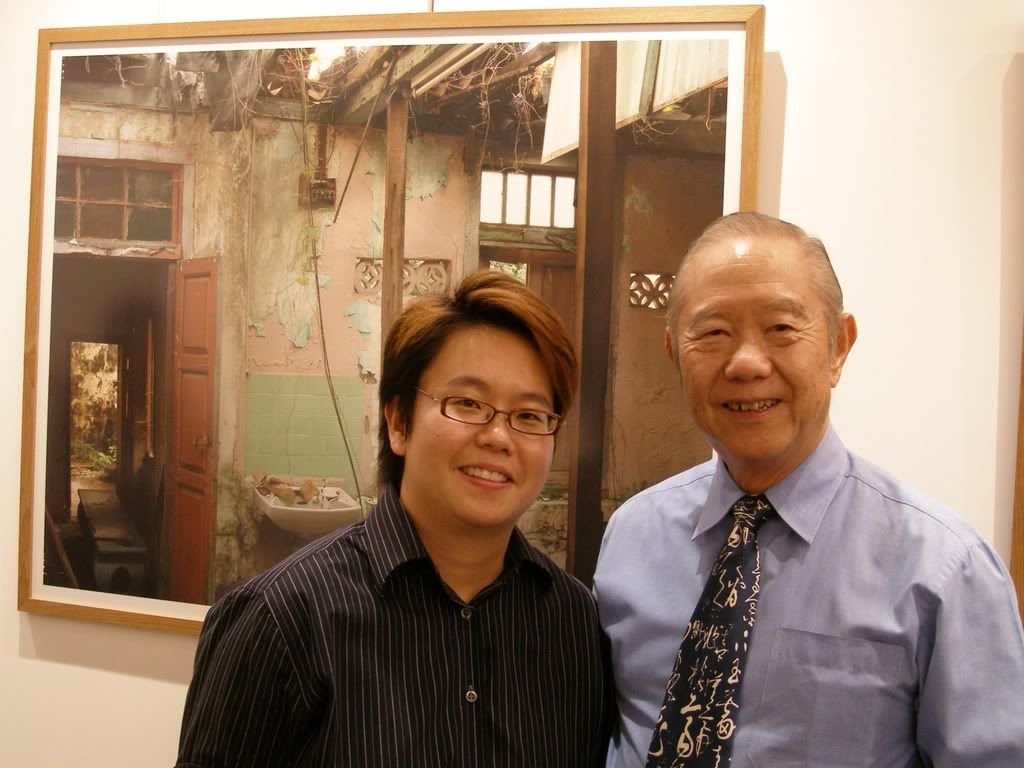
Domestic Dystopia provides an insight into six interiors of dilapidated houses in Singapore. Each photograph reveals the traces of footsteps and impressions left behind by previous occupants, encapsulating these moments in their personal histories in a snapshot of time. Most of these houses have been abandoned and are left in a state of disrepair.By becoming a translator, Ho takes on the task of translating the deep sense of loss and nostalgia she feels when she is inside these houses onto a series of photographs.

Ho Hui May is the first prize winner of the 26th UOB Painting of the Year Competition, Photography Category 2007.
This is her first solo exhibition in Singapore.

Tuesday, March 27, 2007

RAIN by Ming, April 2-30


We are proud to announce that Rain, a series of work by young Singaporean photographer Ming will be on show at our Gallery, April 2 to 30.

In conjunction with the exhibition, we will be hosting a small reception on the evening of April 17. Write us at gallery@kayngeetanarchitects.com if you wish to join us.

Limited editions prints from this series are available for sale from our Gallery.

Friday, March 23, 2007

A Little Hiatus

Yes, the Building Block exhibition by Darren Soh has finished and we don't currently have a show at the Gallery. But let us assure you that shows and our ever-popular forums are being prepared and we will be making announcements soon.

We have received a constant flow of enquiries on exhibiting at our space but keep them coming.

Saturday, February 10, 2007

The Much-Awaited Transcript from Forum#3

This is the first draft of the much-awaited transcript from Forum #3, Photographing Grief. It is, at this stage, incomplete and not error-free. We hope to fix all the bugs as soon as possible. Sorry.


Kay Chin: I know when a group of photographers meet we can just go off tangent so my job is to make sure we don’t go too far off topic. Today, the focus of our discussion is on why we photograph things that are not so happy—disasters, war, stuff like that. Ultimately I know someone is going to ask, what is it like to work with an NGO? Which NGO is better than the other? But I think we can focus just a little bit, and ask ourselves why is it so attractive to photograph grief … and we can take the conversation…we can be very honest…or funny…about it.

Before we start, let me announce our next forum. We are going to talk about identity/women in photography - a very important topic. Magali Pettier, who is here on the IPRN exchange program, together with American photographer Meridel Rubenstein, are going to talk about this topic of identity.

The forums are recorded for the sake of those who can’t be here. We put it up on our blog. If you are doing research, you should go to the website, there’s a wealth of information there. So we will transcribe this recording. We would appreciate if you are speaking for the first time, if you could identify who you are, just your name would be helpful.

Ming: Hi everyone, my name is Ming. I’m actually a commercial photographer. I’m trained in photography, not particularly in documentary photography but I always had an interest in journalism and documentary. At my short stint at The Straits Times before, that’s where my interest grew, and that’s where I met Kay Chin. And we’ve been friends all these years. Before tsunami hit, we decided that we wanted to do something charitable at least once a year. We didn’t know that tsunami was going to hit, right? So before that he introduced me to Mercy Relief. And I thought I should do something charitable that year. Right after I signed up, the tsunami hit. So the first thing I did was I got sent to Meulaboh two months after the tsunami. Here are the images. This was the school that Mercy Relief helped to rebuild. A townhouse right by the coast. That was a bridge before. That’s a mass grave. Those are the body bags.

Kay Chin: Why did you go, apart from the fact that they called you?

Ming: I wouldn’t say that I thought that it would be quite a cool experience. But I think it was one of those things I had to see for myself and see what I can do. Apart from photography, I could have gone to help with physical labor, but I thought with my skills I could contribute with whatever I can. All these pictures were given to Mercy Relief. Whatever awareness campaigns that they were doing, whatever they needed to raise funds to show people what happened to Meulaboh.

Jessica Lim: Did you deliberately not take pictures of people?

Ming: Not really. It’s just that the faces were quite staunch, and they were all over. For me it’s not a cultural project, so I didn’t go looking for people to shoot. My concentration was mostly the surroundings, like a landscape survey, and basically the goal I gave myself was what I can contribute, what I can help the relief effort through photography. So I thought pictures like this, not overly gruesome, but you know, enough to move people to contribute in other ways by giving money, a donation.

Jessica: But that’s the question, you see. People are typically not moved by pictures of architecture; they want to see the crying, they want to see the people sobbing.

Ming: So did you take pictures of people?

Jessica: I covered the floods in Malaysia; there was no grieving there. When I was going up to Johor, one of the Singaporeans who went up with us, and her first time with Mercy Relief, she said, “There’s no crying! They don’t look like they’re in shock, you know? Why am I here if these people aren’t crying?” That’s what made me realize, based on the kind of pictures that newspapers select…

Ming: Yeah, exactly. Because we are not running a newspaper, in my pictures I don’t like to state the obvious. These days, with all the information submitted though pictures, people are smart enough to think for themselves what exactly is happening. When given a context through captions, they will understand. Rather than throwing at them pictures of body parts. Maybe Terrence might have some pictures like that, I dunno.

Magali Pettier: The thing is, when you photograph people, a lot of people don’t react to it anymore. They read the paper and then go back to their dinner. It’s very hard to catch people’s attention.

Kay Chin: If you think what we do doesn’t affect people, can we say that we are just going there as tourists?

Ming: A new type of tourism. [Laughter.]

Kay Chin: So if it doesn’t affect people, then should we be shooting more what people want to see? Make nice pictures that sell in a gallery…

Magali: I think it does affect people, but not in the way that they can react straight away to it. Just because people don’t react so quickly…

Kay Chin: Maybe we say that we are making a distinction between documentary photography and news photographers who need to say, “I told you it happened.”

Ming: On this topic of photographing people, when I got there, and I went on the streets, everyone looked so happy. It would be a bit disturbing to photograph these happy faces and send it out. Two months after, it seemed that life had gone on. People need to go on living, right? They have to. What I saw, was everyone seemed happy. I went to this kopi(coffee) shop and I had a mee soto or something, and the girl making the soup, she’s in her early twenties, and she lost her whole family. But before I knew that, she was talking to me and smiling, and everything seemed normal. And then one of the relief workers said that she lost her whole family.

Kay Chin: And do we not take those happy pictures? We take a picture and say, “They are all already happy one.” No need to help them…

Jessica: Depends from person to person. Because there will always be those who look happy in public because maybe they think you’re a tourist. It could be very different when you are not around.

Kay Chin: How many of you think that photographers are parasites? Of the photographers here, do you ever question your own mission?

Jessica: A lot of it is voyeurism. Wanting to see things that people would normally not allow you to see.

Kay Chin: Is there anyone who felt guilty that you went and did nothing but manipulated people, and with a nice camera make black and white pictures…[laughter.]

Magali: Sometimes I do. Sometimes I feel bad for the subject. They are hoping you will give them something in return. Sometimes, you want to, but you can’t give back to everybody.

Kay Chin: But we continue to lie to them—“Don’t worry, you’ll be on the cover of National Geographic.” [Laughter]

Magali: I don’t think it’s lying, because you do want to do something for them, but at least you try…

Kay Chin: So hypothetically, if you don’t feel something, can you go and photograph something without feeling like you’re on a mission?

Leonard Goh: I was thinking it would work better. Because sometimes our opinion gets in the way.

Kay Chin: Does everybody in this room believe that photography can do something? I’m reading a book called Watching the World Change, by David Friend. It’s about 9/11 and photography. It’s 400 pages of examples of how photography helped people to grieve, helped people to bond, to remember. It’s like total therapy.

Geoff Pakiam: I think that the limit of photography is that you can only take pictures of what has already happened, and you cannot change what has already happened in the past. But can a photograph actually change what will happen…can it shape the future?

Kay Chin: So how the pictures are eventually used and interpreted. Are you concerned that you can never be in total control of how your pictures are interpreted? Without knowing the smiling girl lost her family, without knowing the context, so many stories can be…

Jessica: Again, you’ve really got to differentiate between documentary photography and news.

Geoff: There’s a quote in (Susan) Sontag’s book which I really…It may not be the fact that the images themselves are problematic, but it’s the way they are structured or used in magazines for entertainment or to catch people’s attention. There’s nothing wrong with taking pictures of pain, because a lot of times it’s never a complete success; it’s always a partial failure. It doesn’t mean you should stop doing it. It’s a constant process of learning…

Magali: You are also recording history in books and archives, so now there’s not only one aspect of history, now photographers are out there recording different versions of history. And photography attracts people’s attention to a number of things…

Kay Chin: So it would be okay to exhibit pictures or dead bodies and make money off it.

Magali: It depends on what context. If you don’t say I’m going to make money off it…It’s the intention.

Kay Chin: But who in their right mind would want to buy a picture of someone dying? There’s a French photographer Luc Delahaye who has a series called “History,” and it’s all of people dying, and people are paying 5 or 6 figures to collect because they’re beautiful. If you make money from disaster pictures, are you obligated to give away that money?

Magali: Personally, I would try to.

Kay Chin: I remember reading an interview with Brazilian photographer Sebastio Salgado — his kids all went to private school — he made tons of money from his pictures of people suffering. But he says, “There’s nothing wrong with me making pictures of people grieving and my kids go to private school…” He did a documentary photo-book on workers in the coal mines. It would take the workers one month to earn enough money to buy a copy of his book.

Magali: But I think if you give them a copy of the book, that’s their history, that’s them. That’s big enough. I think it’s a source of pride for a lot of people [to be photographed]…

Terence Teo: I was in Meulaboh two weeks after the tsunami, when they were still picking up all the bodies. Before that I was going to go with a group of nine others. We wanted to go to this orphanage in Medan to shoot portraits. The first group went in November 2004 and I was supposed to go in January, but then when the tsunami hit…

The first four days after the tsunami, I was feeling very angry, a bit helpless. 60,000 dead and 120,000 missing. I didn’t want to stay at home and watch movies all day in the midst of this.

I tried to change the way I shot after that. Meulaboh was a bit of an eye-opener. When we arrived, when we dropped anchor in the bay, all you see is this huge expanse of flatland. There were three fires in the town, I don’t know why. Apparently a three-story shopping center went up in flames the night we arrived. They don’t know why. After that, we stayed for six weeks clearing out mud in the courtyard of this school so that it could reopen. So the work helped keep my mind off what people in Meulaboh were feeling, so in a way I didn’t feel so guilty.

The second trip was to Nias, and there I was trying to focus on something more positive, about how they were bouncing back. But it was scary, because every night there was at least one after-shock. We were put up in this house there that was structurally unsound. There was a crack running up the whole side. Every day we would see that crack get bigger and bigger. We had a generator, and we were allowed use of the kitchen. But we were told, “If you feel anything, run out of the house because the whole thing could collapse.” The other problem was that our bathroom was also in the house, so all of us had this thought that in case of an aftershock, we would all have to run out into the streets, soap in our hair, towel around our waist and all that. That one was a bit more manageable. The causality rate was not as high there. We were working at this hospital there, and there were plenty of stories coming in…

Kay Chin: I remember reading on your blog that you were really affected the first few weeks after you came back. Your wife told me you couldn’t sleep and you had nightmares. But you went back—why?

Terence: I don’t know. I guess it’s feeling the need to do something. The next trip was Pakistan, the earthquake in Muzaffarabad in October 2005. How was that a different problem—no heavy machinery could go up to Muzaffarabad, so we had families who were camped outside their homes that have collapsed. From inside the homes you can smell decomposed bodies—where family members were rotting. You couldn’t do anything about it because the machinery couldn’t go up the mountain.

In Pakistan we had a guide, he was translating for us. We went about a month after the quake. The thing is it wasn’t the same thing as in Meulaboh. In Meulaboh there was some presence of life getting back to normal. Over in Muzaffarabad, it was 24 hours of doing nothing. There were a lot of people just being idle—no jobs to go to, no families to look after. Just about the only people who were busy were those who could speak English and bring the NGO people around.

Sng Li Wei: In Nias, you went two years ago to do something, right? Why did you choose to take photographs this time instead of physically doing something?

Terence: In Nias, I just brought my camera. For Muzaffarabad they needed someone to document and photograph. That was my role there. Whenever there was a break shooting I would be helping out. But in Nias we helped to build portable toilets and we had to carry water from the only working well in Nias. I asked to go to Nias to help out.

Kay Chin: Can we say that the work we do will help people because the pictures will be seen by thousands of people? Do you feel that we are overstating our mission as photographers?

Justin Zhuang: I think it’s a bit overstated. There’s a lot of documentation of what is happening now, but there’s not enough people to work on a solution. The world is getting more and more voyeuristic. I’m not saying that people should stop taking photographs, but I think there should be more help, lah.

Ming: I think photography is a witness. Without pictures like these, if there was no effort by photographers to go and make a record, then the world wouldn’t be able to see any of this. By recording a time…of grief, of what has happened…maybe in the future people will be able to set up a better relief team because they are affected by these pictures.

Li Wei: If photography can only document a problem but it can’t solve it…

Kay Chin: Who in the first place said that photography could solve anything? Are we not inviting more trouble for ourselves?

Jessica: I think it’s definitely a romanticized view that we are doing something more, and saying we are not being selfish. Maybe we try to justify our occupation this way. But maybe we should accept that maybe I’m not going to change something, and stop being so delusional…

Kay Chin: There is a romanticized notion of this genre of photography. Personally I think that there are many examples of photography that affect people in a positive way. Maybe we can talk about that a little bit.

Shin Lim: I don’t think it’s fair to say photography has no impact whatsoever. The problem is you can’t measure the impact of a photograph. I can’t imagine this world without documentation through photography. If you think about certain images that stick in your head…people are visual creatures, which is why advertising is everywhere. People are impacted by photographs, but it can’t be measured. We do get desensitized after looking at so many disaster pictures, but pictures can still be very effective. By looking at pictures, you become more aware and more educated about what’s going on. Even if it doesn’t make you immediately go out and do something…

Kay Chin: Once I saw a picture of a baby being delivered, and then I wanted to be a father. [Laughter] It’s true! The promise of photography…So can we go back to the question of why do photograph grief if we don’t believe it can do something?

Terence: For me, it’s wanting to share…The first thing that happened when we touched shore was this boy rode up on a bike while we were waiting for transport—he was ten years old—he took us to where his house used to stand. After that, everyone wanted to tell us stories of why they survived, of how they survived.

We were on our lunch break. We were done at the school, we just cleaned up everything, we were happy. Then we met this woman you see here, who lost her husband and children, aged 2 and 4. Somehow or other she survived, spitting up sand for three or four days—she swallowed so much sea water. Then she didn’t know about all the NGOs that came to help. She was staying with her brother-in-law. We met her on our last day in Meulaboh, we were finished with our job at the school, about to go home. Then it hit us, lah. There are other stories that are still untold.

Li Wei: The question seems to be not what is the impact or influence, but how many stories, how many pictures do you need to show before it makes an impact? And is there a point where it gets to be overload?

Terence: It takes as many as it takes. For some people, it takes years of hitting them over the head with a bat before they realize. It took four years for Americans to change their minds about Iraq; to change congress.

Kay Chin: Maybe there are people out there that don’t care about photography.

Terence: Yeah, my mother. I was printing all these photos for Glimpses of Light (a photo exhibit about the tsunami) and I ran into my ex-girlfriend. She asked me, “What are you doing here?” I said, “I’m doing my prints for Glimpses of Light, about Meulaboh.” She’s like, “Meulaboh, what happened?” This was in March. I said, “You know, the tsunami. Aceh was one of the most affected areas, and Meulaboh especially.” True story. There are people who are just lost in their own world.

Kay Chin: There are some people who believe that if James Nachtwey didn’t go, then the accident not so serious. [Laughter] So the Johor flood, who cares? I don’t believe I saw any pictures that show any suffering…

Magali: In England, I’ve got no memory of images [of the tsunami] that made me think it’s really bad. There were only some articles about it. You realize the importance of it [photography]. Sometimes the problem is we take these images, but we don’t try to go further. Even bringing the photos to England and putting them in the streets. As photojournalists, we take the assignment, we go and come back, but then it’s out of our hands, right?

Jessica: I just graduated this year from NTU communication studies. Now I’m working at a magazine as a writer and photographer without camera. Before this I was working in Straits Times as a photographer for almost a year. I think the reason I selected so few pictures is because I haven’t really figured out what I’m doing with photography and photojournalism.

This I’ve taken in Meulaboh in September 2005, this one as well. This one was taken in Bangladesh. The reason I chose these three pictures is because when the topic of the forum came up, when I thought of grief I though of these three people. This one is a picture of Ady, someone I met when I was in Meulaboh. I went there on a school trip. I went with Li Wei here on the same program. Ady was this guy that we met at a café and we found out he lost everyone. I went to see where his house used to stand. This is a picture I took in his room. These are basically all the belongings he has left.

This next picture is of Hayun. Hayun similarly lost everybody, has one daughter in Banda Aceh who managed to survive. He cannot get over the loss of his wife because they never found the body. So he’s got no closure. He stayed in a tent, I don’t know if he’s still in that tent. Kay Chin, did you see him?

Kay Chin: Gone.

Jessica: Gone. So hopefully he’s been relocated to a solid roof. I visited him a lot when I was in Meulaboh. He didn’t want any attention and that made me want to talk to him more. Because if he’s trying to hide from you at least you know he’s being sincere and not trying to make the story worse than it is to get more attention.

This is Sufia, who I spent about two weeks with when I was in Bangladesh on an internship. Hers is not really a tale of grief. I photographed her because her family lives on the street. I followed her for about two weeks and made friends with her. When the assignment was over I visited her occasionally after that just to say hello, not to take pictures anymore, just to go there and have tea, and then she will treat me and I will buy some stuff for her.

So a week before I was about to leave Bangladesh she found out that I was leaving, and she told me to come back Wednesday, “I want to bring you to a grave.” I asked, “Why?” And she said, “Just bring your camera, I want you to go with me.” So we went that Wednesday, and I found out it’s the grave of her only son. She has two daughters but in Bangladesh they don’t count, you see. This is her only son that she lost. He died when he was 20. She told me the whole story before, but I never wanted to talk to her about it, because it would make her very upset. I was very surprised that she actually brought me to the grave. They had a ritual. The guy on the right is her grandson. He does not know or remember his father.

So I guess this was a very pivotal point for me, where she actually wanted me to photograph her grieving. She wanted me to be there. She wanted me to have me camera, and to see her cry. I didn’t really understand why, lah. I don’t want to second-guess what’s in her head. I don’t think these three pictures are particularly strong or stand alone, but to me they are important. I think that I am more concerned with my subjects than my audience. That’s perhaps going to be my very big downfall.

Leonard: Did you send her this picture?

Jessica: Yes. I mailed it to her.

Magali: Now she has that memory that you gave her. Even if you haven’t done anything outside of that, you’ve made one person happy.


... to be continued ...

Friday, February 09, 2007

Opening Hours for Lunar New Year 2007

The Gallery will be closed Feb 17 to Feb 21, as well as Feb 24.

Feb 22 & 23 are the last two days to catch Darren Soh's exhibition, Building Blocks.

We would like to take this opportunity to wish everyone a Prosperous & Healthy New Year. Gong Xi Fa Cai.

Wednesday, January 31, 2007

Farewell/Thanks/Welcome

Julia Benjamin, who many of you have met at our gallery, is no longer working with us. We want to thank her for all the works she done during the short stay, and to wish her the best for the future.

Yes we are looking for a good soul who believes in our cause/s and who don't mind the aircon environment, beautiful garden, broadband access and easy access to the drinking holes in Duxton area.

Until further notice, future communications should be sent to gallery@kayngeetanarchitects.com or kaychin@kayngeetanarchitects.com.

Forum #5: Happily Ever After

Our next Forum on Photography will be held on Monday, Feb 12, from 7pm. This is a rare departure from our regular Saturday slot as many wedding photographers work on Saturday. The discussion will be led by Kuang, a respected leader in the industry, and the topic will be organized loosely around Wedding Photography.

Apart from the usual questions of how does one get started or the price one should charge, we hope to talk about the other issues that concern the photographers. In particular, we would like to discuss issues like how photographers can stay motivated and fresh despite having to shoot a wedding (and sometime more) per week. We are also interested to see how the most important day can be approached differently.

Here are the speakers we have lined up so far:

Eadwine Lay / www.plushphotography.com.sg

Eadwine Lay, a full time wedding photographers defines his style as editorial wedidng photography, which is essentially wedding photography posed to look like it had come out of a magazine. He will be speaking about his style, called editorial wedding photography and how it deviates form the current trend of photojournalism and why he belives it is the future of wedding photography.

Ron Lee / eye-deas.com

A graphic designer by training, Ron Lee, a full time wedding photographer, translates visual forms into his own style of journalism photography.

Wan Sheng / www.feldberyl.com

Wan Sheng's work is defined as wedding photojournalism with a romantic twist. He will be speaking about his own style of documentary wedding photography and how he softens his images with romance counter to the normally realistic and hard portrayal of life through traditional forms of documentary photography

Kuang / www.39eastimages.com

Kuang's work is a mixture of traditional documentary photography with a move towards abstraction. He will be speaking about how my work has shifted from pure documentary towards abstract, as well as the business of it.

Stay tuned for more details. For the time being, you may want to get in touch with Kuang at ckuang@yahoo.com or Kay Chin at kaychin@kayngeetanarchitects.com

The talk is free. Registration is NOT required but as seats are limited, do come early. (We can take 30-40 people comfortably. Some people will end sitting on the floor but so far, there has not been any complaint)

The Gallery is located at 16-17 Duxton Hill. Closest MRT stations are Chinatown, Tanjong Pagar and Outram.